100 Years Ago, One Random Guy Owned 5% Of All Oil Found In Iraq… And YES He Died One Of The Richest People On The Planet
ByBrian Warneron August 1, 2022inArticles›Billionaire News
Nicknames can be a blessing or a curse.
For example, in the 1970s an Oakland A’s batboy named Stanley Burrell earned the nickname “Hammer” thanks to his uncanny resemblance to Hammerin’ Hank Aaron. Stanley still carried that nickname decades later when he became the world famous master of ceremonies, better known as M.C. Hammer .
Around the same time, over in Michigan a 15-year-old named Earvin was permanently stamped as " Magic" Johnson by a local sportswriter after scoring a triple-double with 36 points, 18 rebounds, and 16 assists in a high school basketball game.
These are good nicknames.
In terms of bad nicknames, we all probably know someone who – even as an adult with a wonderful life and respectable job – is called something like “Gassy Mike” thanks to ONE momentary embarrassing incident that happened in middle school. That would be a bad nickname.
In 1955 an oil engineer named Calouste Gulbenkian died at the age of 86 in Lisbon, Portugal. Every single obituary of Calouste referred to him by his nickname. That nickname was:
“Mr. Five Per Cent”
On the scale of good and bad nicknames, “Mr. Five Per Cent” was… extremely good. How good?
That nickname resulted in Calouste Gulbenkian being one of the richest people on the planet at the time he died, leaving behind a massive philanthropic foundation and one of the world’s most-valuable private art collections…
This is the story of Calouste “Mr. Five Per Cent” Gulbenkian…
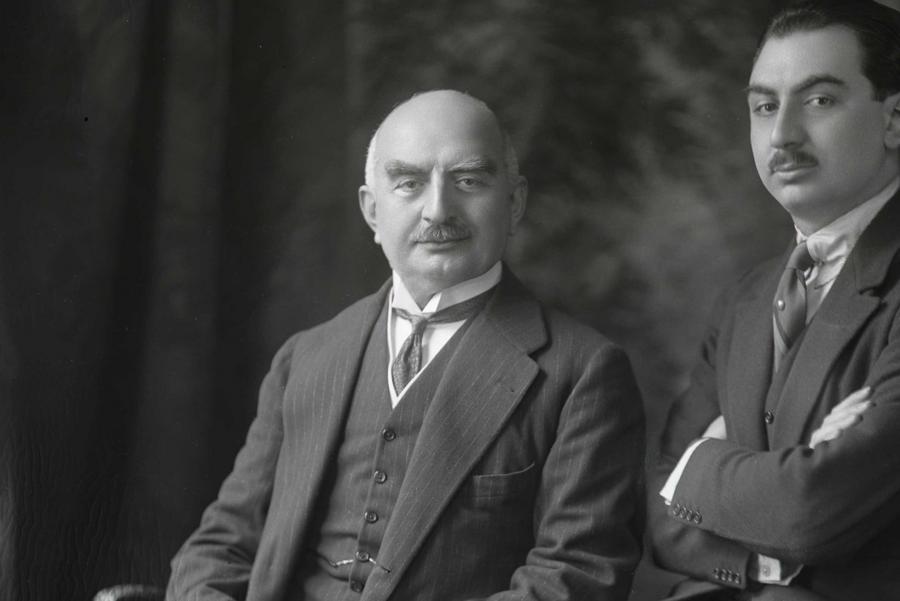
Calouste Gulbenkian (1867-1953) and his son. (Photo by: Photo12/Universal Images Group via Getty Images)
Falling in Love with Oil
Calouste Gulbenkian was born on March 23, 1869 in present-day Istanbul but what was then called Constantinople, the capital of the Ottoman Empire.
His father had made a small fortune in banking and oil so Calouste was raised with every advantage. For high school he was sent away to a private school in Marseilles, France. After high school he enrolled at the prestigious King’s College London where he studied mining and engineering with the clear intent to dive into the oil business as soon as possible
He graduated in 1887 at the age of 18. At 19 his father shipped Calouste off again. This time to the city of Baku, in modern-day Azerbaijan. A half century prior to Calouste’s arrival, the Russian Empire discovered a massive quantity of oil in Baku. Russia built a sprawling oil industry in Baku that transformed the country into a modern global empire while generating previously-unfathomable private fortunes for men like the Nobel brothers (one of whom would become famous later for inventing dynamite and funding the Nobel prize ) and the Rothschild family . Calouste’s own father earned his fortune in Baku, though not nearly at the scale of the Nobels or Rothschilds.
While living and working Baku, Calouste fell in love with the oil business. When he returned to France a few years later, he published his experiences as a series of magazine articles. In 1891 his articles and other writings on Baku and the oil business were published as a standalone book.
Mesopotamia
That book found its way to the desk of a Turkish Sultan. Impressed an excited to learn the author was Turkish by origin, the Sultan reached out to Calouste to see if he would be interested in searching for oil on behalf of the government. The Sultan was specifically interested in a desolate desert which at that time was under Turkish control. That area was called Mesopotamia. Also known as modern-day Syria and Iraq.
Amazingly, Calouste didn’t even have to visit Mesopotamia to become convinced that there was oil to be found in the region. He collected dozens of research reports put together by previous assessors and, most importantly, he spoke to railroad engineers and conductors who had traversed the area for years. Those rail workers told tales of oil practically bursting out of the ground without provocation, forming little puddles across the desert.
Upon reading his report, the Turkish Sultan was convinced. Unfortunately, further exploration was put on hold as Ottoman Empire began to collapse, and Calouste was forced to flee to London where he pursued other opportunities for the next few years.
While living in London, Calouste was offered the chance to hunt for oil in Persia, also known as modern-day Iran. He declined because he thought it was too risky of a gamble. Much to his dismay, in short order Iran proved to contain one of the largest sources of oil on the planet. Learning from his mistake, Calouste vowed to never let an opportunity slip through his fingers again. In fact, for the rest of his life he kept a plaque behind his desk that read " Never give up on an oil concession ."
The Turkish Petroleum Company
In 1907, approaching 40 and still reeling from his missed fortune in Persia, Calouste approached two London business acquaintances about the possibility of setting up a concession in Mesopotamia. The acquaintances, the Samuel brothers, operated a company called the Shell Transport and Trading Company. Their company name was a reference to their father, Marcus Samuel, an immigrant Iraqi who literally sold seashell knickknacks from a cart around the London docks.
As oil became a larger portion of the brothers’ transport and trading business, the company became better known as Shell Oil. After Gulbenkian arranged for the Samuel brothers to merge with a company called the Dutch Petroleum Company, he rewarded himself with a 5% stake in the newly formed, Royal Dutch Shell.
Acting as an advisor to the Turkish government and a director of the National Bank of Turkey, Calouste put together an organization whose sole purpose was to locate and extract oil from Mesopotamia. That organization would be called the Turkish Petroleum Company (TPC). At the outset in 1912, the equity ownership was awarded as:
- 25% = Royal Dutch Shell
- 35% = British government interests
- 25% = German government interests
- 15% = Calouste Gulbenkian
You may have noticed Calouste got 15% in this deal. So why isn’t he called " Mr 15 Per cent “?? Because this deal never actually came to fruition.
As World War 1 erupted around the world in 1914, the TPC was put on ice. And when WWI concluded, the members wanted Germany OUT of their consortium. The British and Dutch ALSO wanted to squeeze this random Armenian guy to take back an additional 15% cut, but Calouste Gulbenkian wasn’t going down without a fight.
Calling in every connection and ounce of negotiating power her could muster, Calouste arranged for France to take over Germany’s former 25% share of the TPC. And as a show of gratitude for his efforts, France rewarded Calouste with…
5%
That was a 5% royalty on all revenue generated by oil found in what eventually became known as Iraq. Calouste Gulbenkian’s 5% deal lasted for decades. It lasted several years beyond his death in 1955. Hundreds of millions, perhaps billions of dollars were generated for Gulbenkian.
The TPC was rendered defunct on December 12, 1961. That’s the day the Iraqi government enacted Law No. 80, which expropriated (took away) 99.5% of all oil concessions in the country, nationalizing Iraqi oil and ending all for-profit private oil business in the region.
A Vast Fortune
As we mentioned a moment ago, Calouste Gulbenkian died on July 20, 1955 at the age of 86. In his remaining years he split his time between a suite at the Ritz in Paris and a large estate in Lisbon, Portugal.
He spent the decades between the late-1920s and his death collecting 5% royalty checks. Those checks made Calouste Gulbenkian one of the richest people on the planet.
At the time of his death, Calouste Gulbenkian’s known fortune (he left unknown amounts in trust to family members) was estimated at…
$800 million
After adjusting for inflation, that’s the same as around $9 billion in today’s dollars.
Upon his death, the majority of his vast fortune was used to establish the Calouste Gulbenkian Foundation .
According to its 2021 prospectus, today the Calouste Gulbenkian Foundation has around $4 billion worth of assets under management. That makes it one of the 40 wealthiest philanthropies on the planet, with roughly the same assets as the Bloomberg Philanthropies and the Rockefeller Foundation .
Calouste Gulbenkian also left behind one of the most valuable private art collections in the world. Today that collection is managed by his foundation and housed in Calouste Gulbenkian Museum in Lisbon.
The museum features masterpieces from many artists you’ve heard of like Renoir, Rembrandt, Degas, and Rodin, as well as one of the most impressive private collections of art from the ancient middle east, China and Japan.
That’s the story of Calouste Gulbenkian, A.K.A. “Mr Five Per Cent.” Hopefully when you die you have an equally enriching nickname!
- Before He Was Deposed, The Shah of Iran Enjoyed A Staggeringly Extravagent Life Thanks To An Endless Gusher Of Oil Royalties
- What Happened To J. Paul Getty’s Empire And Fortune After His Death In 1976?
- One Day He Was The Richest Person In The World. The Next Day He was Bankrupt. The Truly Unreal Life Story Of Nelson Bunker Hunt
- Jeff Bezos’ Net Worth Is Inches Away From $100 Billion Thanks To Black Friday
- The Nobel Prize Exists Today Because Alfred Nobel Felt Extremely Guilty About The Invention That Made Him Enormously Rich
- J. Paul Getty Net Worth
One Day He Was The Richest Person In The World. The Next Day He was Bankrupt. The Truly Unreal Life Story Of Nelson Bunker Hunt
ByBrian Warneron November 6, 2024inArticles›Entertainment
On October 21, 2014, a man you’ve probably never heard of died in Texas at the age of 88. The man died at a modest assisted living center outside of Dallas, where nurses were treating him for dementia and cancer. If you saw him towards the end, you understandably would have assumed this person lived a fairly unremarkable life. That could not have been further from the truth.
How many people who die on a given day have the distinction of having been the richest person in the world at one time?
Even crazier, how many people who die on a given day can also say that they lost billions of dollars and were left bankrupt by one bad bet? This is the unreal life story of Nelson Bunker Hunt.
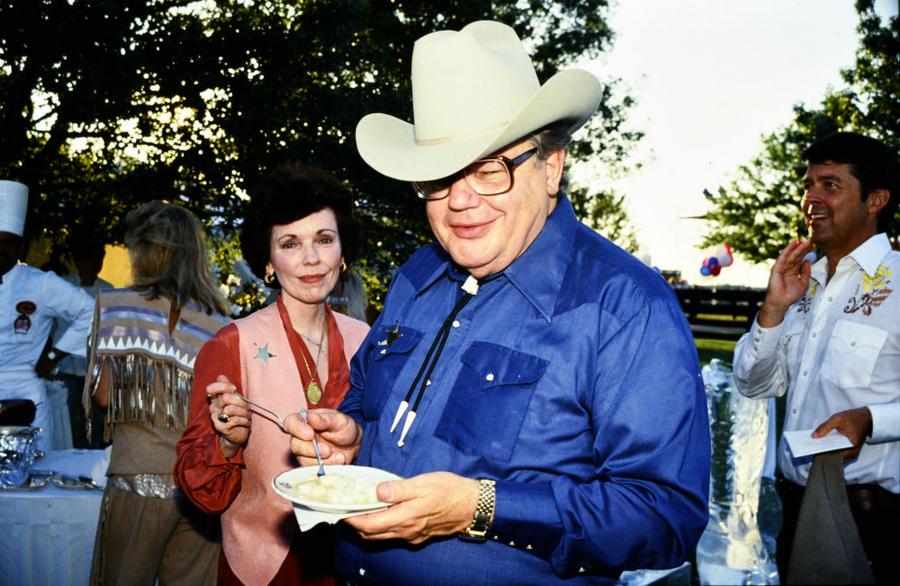
(Photo by Paul Harris/Getty Images)
Nelson Bunker Hunt
Nelson Bunker Hunt was born on February 22, 1926, in El Dorado, Arkansas. The family moved to Dallas when Nelson was very young. His father was an extremely successful oil tycoon named H.L. Hunt, who was one of the first people to discover oil in East Texas. H.L. Hunt was also an extremely successful procreator. Nelson’s father would go on to have 15 children by three different wives.
Out of all of the Hunt children, Nelson was most like his father. Just like Dad, Nelson dreamed of striking it rich in oil. And since Dad had Texas pretty well tapped, Nelson decided to try his luck overseas.
Nelson was also inspired to seek his fortunes abroad after seeing the enormous success Jean Paul Getty had in Saudi Arabia. As we detail in this article , prior to 1949 (the year Getty made his Saudi investment), 95% of all the oil in the world had been found in the United States. Saudi Arabia was a desolate little Kingdom with basically no natural resources or wealth whatsoever. But after four years of painstaking work, Getty struck the motherload. Saudi Arabia became the unimaginably wealthy Kingdom that we all know today, and Jean Paul Getty became the wealthiest person on the planet.
Following in Getty’s footsteps, Nelson Hunt also tried to strike it rich in the Middle East. His first two oil leases, in Saudi Arabia and Pakistan, were huge disappointments that wiped out a lot of money and produced zero oil.
The third investment turned out differently. In 1961, Nelson jumped from the Middle East to Africa and made a large bet in Libya. There, he struck black gold on an enormous scale. He wound up discovering the Sarir oil deposits which to this day is the largest oil field in North Africa.
The Sarir oil fields made Nelson enormously wealthy. The discovery produced billions of dollars of revenue for Hunt International Petroleum for over a decade. He eventually owned more than 8 million acres of oil fields in Libya.
Unfortunately, the bonanza came to an abrupt halt when a little-known future dictator named Muammar Gaddafi came to power in 1973. Muammar Gaddafi quickly seized control of all of Hunt International Petroleum’s assets and nationalized the Sarir deposits. Over the next four decades, Gaddafi would use Sarir to stash a personal fortune that some experts estimated peaked at over $200 billion .
Undeterred by the loss, Nelson Hunt used his fortune to invest in new international oil ventures, vast parcels of real estate, pipelines, and more. His brother, Lamar Hunt, who also became very wealthy thanks to Sarir, founded the American Football League and the modern-day Kansas City Chiefs. Lamar Hunt’s family, led by Clark Hunt , still owns the Chiefs today.
Silver Investment
In the 1970s, Lamar, Nelson, and their other brother, William Herbert, became heavily involved with a new investment: Silver . The brothers began amassing an enormous position in silver futures contracts and physical silver bars and coins. At first, it was just a small hedge, but by 1979, the brothers were literally attempting to corner the world’s entire silver market. At their peak, they controlled 1/3 of the world’s silver. Much of their investment was made with borrowed money.
" We think it is unconscionable for anyone to hoard several billion, yes billion, dollars’ worth of silver and thus drive the price up so high that others must pay artificially high prices for articles made of silver .”
Throughout all the good times, Nelson always traveled economy on planes and used public transportation in every city he visited.
Richest Person In The World
Nelson’s idol/rival, Jean Paul Getty, had been the richest person in the world for many years up until his death in 1976. By 1980, with silver still going strong, the brothers’ position was worth $7 billion . That’s equal to $27 billion today. At that point, the financial press of the day crowned Nelson Bunker Hunt the richest person on the planet with a personal fortune of $4 billion . That’s equal to $15 billion today after adjusting for inflation.
At his peak, Nelson owned a massive mansion in Dallas, a 2,000-acre ranch 30 minutes outside of Dallas, five million acres of land in Australia, 1,000 thoroughbred horses, cattle ranches, impressive art and coin collections, and much more.
Despite his enormous wealth, Nelson wore cheap suits, drove a beat-up Cadillac, flew economy and preferred burger joints and rodeos to fancy country clubs.
Silver Thursday
On March 27, 1980, a day that is now known as “Silver Thursday,” the silver bubble exploded. By the end of the day, the Nelson brothers’ $7 billion position turned into a $1.7 billion debt . Several exchanges called in margins that the brothers could not meet. Lawsuits flew over the next several years, and eventually, a Texas court ordered the brothers to pay hundreds of millions of dollars in restitution to a variety of creditors. The brothers eventually agreed to pay $90 million worth of back taxes over 15 years and $10 million per person in fines by the Commodities Futures Trading Commission. They were also barred from trading commodities going forward. In order to pay off their debts, they were forced to sell off most of the family’s remaining assets. Despite their bad fortunes, Lamar somehow managed to hold on to the Chiefs.
In September 1988, Nelson Bunker Hunt, once the richest person in the world, filed for bankruptcy. His estate, which was valued at $150 million, was completely liquidated. The money that was raised from the liquidation went to pay down tens of millions worth of fines, and IRS debt. Nelson was also banned from ever trading commodities again in his lifetime.
At a congressional hearing that was called to examine the collapse of Silver, Nelson was asked about his personal net worth. Here is his exact response:
" I don’t have the figures in my head. People who know how much they’re worth aren’t usually worth that much. But a billion dollars ain’t what it used to be. "
As part of the bankruptcy filing, Nelson was also forced to sell off 580 thoroughbred horses, which were kept at stables around the world. Nelson had developed a passion for horses and, at one time, owned over 1000 of various breeds that won many prestigious races. Here he is in better times, 1974, receiving a trophy from Queen Elizabeth after a horse race:
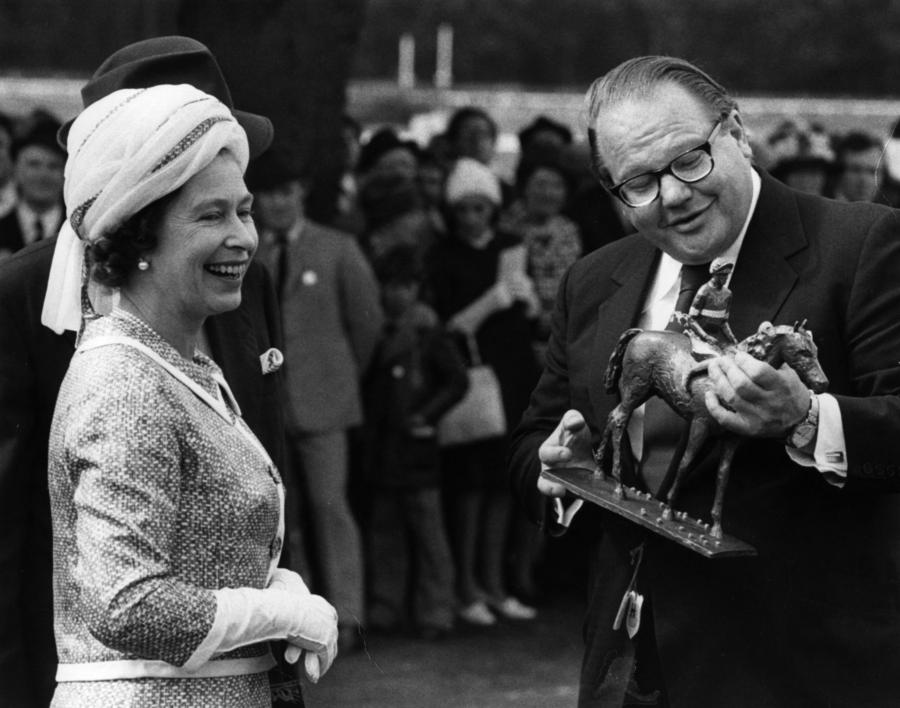
Central Press/Getty Images
Nelson’s brother, W. Herbert Hunt, eventually had an amazing reversal of fortunes. Herbert was not quite as devastated by Silver Thursday or the ensuring legal problems. He went on to invest in Montana’s oil fields. Herbert sold his Montana investments in 2012 for $1.5 billion. Herbert Hunt was worth $3 billion when he died in April 2024.
Unfortunately, Nelson’s fortunes never really turned around. He lived most of his remaining years modestly at a small home in Dallas. Poor health eventually forced him into an assisted living center, where he died at the age of 88 in October 2014. He was by no means a defeated man, more like a man with a really good life story to tell. I mean, how many people reach the literal pinnacle of wealth while battling global dictators, only to lose it all on one really, really, really bad gamble? Imagine what we would be writing today if that silver gamble actually paid off??!! Until the very end, Nelson Bunker Hunt’s life was rarely boring.
- Imagine How Rich You’d Be If You Bought All Of Saudi Arabia’s Oil Exploration Rights Back In 1949. That’s What J. Paul Getty Did…
- What Happened To J. Paul Getty’s Empire And Fortune After His Death In 1976?
- Saudi King Abdullah Dead At 90 – Throne And $18 Billion Net Worth Up For Grabs
- If You Were The Richest Person On The Planet, Would You Pay The Ransom For Your Kidnapped Grandson? J. Paul Getty Didn’t.
- How One Family Ended Up Owning The Largest Supply Of Oil In The World – And Accidentally Became Trillionaires
- Everything You Need To Know About The Trillion Dollar Family That Rules Saudi Arabia
