Andrew Modlin Net Worth
- Mark Zuckerberg
- Andrew Mason
- Dustin Moskovitz
- Chris Hughes
- Snoop Dogg
- Cristiano Ronaldo
- Angelina Jolie
- Brad Pitt
- Leonardo DiCaprio
- Denzel Washington
- Ryan Reynolds
- Rihanna
- Diddy
- Beyoncé Knowles
- Kim Kardashian
- Taylor Swift
What is Andrew Modlin’s Net Worth?
Andrew Modlin is an American artist and businessman who has a net worth of $50 million. He is best known for being a big player in the legal marijuana industry thanks to the company he co-founded, MedMen.
Andrew Modlin was born in Los Angeles, California in March 1987. He graduated from Harvard Westlake High School in 2005 then attended UCLA School of Art and Architecture. In 2010 he co-founded MedMen with Adam Bierman. The company provides turnkey services for licensed cannabis operators and raises capital in strategic markets. The company has helped more than 100 businesses enter the legal marijuana market. Modlin and Bierman were featured in Time magazine in April 2015. Andrew Modlin became the President of MedMen in 2010. MedMen has locations in six states including New York, California, and Florida.
Real Estate : He purchased a $3.9 million home in Hollywood in 2019. He sold this home a year later to YouTuber Emma Chamberlain in 2020, for a roughly $5,000 profit. In July 2019 Andrew bought a home in the Hollywood Hills for $11 million. Nearby neighbors include Keanu Reeves and Leonardo DiCaprio .
Controversy : Modlin and Bierman have come under fire for spending lavishly on unnecessary expenses while their company’s finances were allegedly not fully secure. For example at one point they were allegedly spending $4 million per year on personal security for themselves, much more than Facebook spends on Mark Zuckerberg or Apple spends on Tim Cook . In early 2019 Modlin and Bierman were sued by a group of investors. The lawsuit claimed the duo engaged in “rampant, brazen self-dealing”. Around this time a former employee claimed that Bierman, with Modlin’s help, falsified his personal brokerage statement to apply for a home mortgage. The former employee also claimed that Modlin used company funds to buy furniture for his personal home.
In December 2019 the company was forced to layoff 40% of its workforce. In January 2020 Adam Bierman resigned as CEO and gave up his voting rights in the company. Modlin also agreed to give up his voting rights but remained as Chief Brand Officer.
By mid-May 2020, the MedMen’s stock price had dropped 95% from its all time high in late 2018.
- Emma Chamberlain Net Worth
- Mark Zuckerberg Net Worth
- The Marijuana Billionaire Who Accurately Predicts Where It Will Be Legalized Next
- Ray J Signs $1 Million Deal To Become Chief Strategic Media Officer For Weed Company
- Legal Marijuana Sales Skyrocketed To Record Levels On 4/20 This Year
- How To Lose 96% Of Your Fortune And Get Fired From Your Own Company: The Downfall Of American Apparel Founder Dov Charney.
The Marijuana Billionaire Who Accurately Predicts Where It Will Be Legalized Next
ByAmy Lamareon March 7, 2019inArticles›Billionaire News
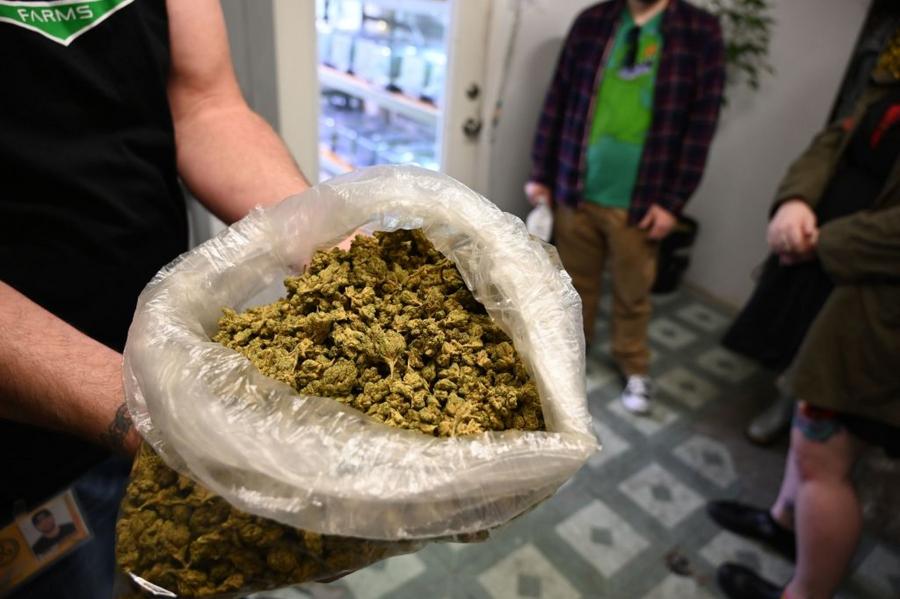
Brendan Kennedy has been on the go since his company, Tilray, went public in July 2018. In fact, he has boarded more than 135 flights, 23% more than he did the year before. His company is in one of the hottest industries to hit the market in eons – marijuana. Tilray sells cannabis for medical marijuana and the growing recreational marijuana markets. The IPO of Tilray not only made Kennedy a billionaire, but also the richest man in the legal marijuana business.
Tilray’s headquarters are in Nanaimo on Vancouver Island in British Columbia, a short flight from Kennedy’s home in Seattle. Tilray quickly became one of the largest employers on the island of 92,000 people. Tilray’s 65,000 square foot cannabis lab and grow facility produces thousands of pot plants that are shipped to tens of thousands of patients, pharmacies, and dispensaries in 12 of the countries where medical or recreational weed is currently legal.
Marijuana is now legal for either medical or recreational use in some 36 countries and 33 U.S. states plus the District of Columbia. There is still a federal ban on marijuana, but the recently passed Farm Bill exempted the hemp plant and its derivative cannabidiol, or CBD, from the federal ban, clearing the way for explosive growth. Legal pot sales are expected to more than double from $10.5 billion in 2018 to $22.2 billion in 2022 in the U.S. alone. Worldwide, that figure is expected to be $31.6 billion. By then, Kennedy expects that the U.S. will have legalized the drug in all 50 states.
ROBYN BECK/AFP/Getty Images
Kennedy grew up in San Francisco as the sixth of seven children. He was never a pot smoker. He was born with a cleft lip that required surgery to repair. He attended an all boys Jesuit prep school called St. Ignatius – where his dad taught science. He studied architecture at UC Berkeley and worked construction during school. Kennedy started and sold two dotcom-era software companies and then went and got his MBA from Yale. In 2006, after business school, he got a job working as an internal analyst at Silicon Valley Bank. His job was to help venture capitalists and their portfolio companies value their private stock. During the spring of 2010, Kennedy kept coming across data that placed significant value in the cannabis industry.
California was putting a ballot question on legalization before voters that fall. He pulled Gallup poll charts on American attitudes about controversial issues like gay marriage and the legalization of marijuana and found a trend – support for both was growing equally and state laws were following suit. The only doubts Kennedy had about the cannabis industry were his own ambivalence toward the product. He struggled to balance the enthusiasm he heard from cancer patients and military vets with the attitude of his own anti-drug upbringing. Nancy Reagan’s old slogan about staying away from drugs haunted him. How could the thing she railed against actually be good for you? However, at the same time, Kennedy didn’t think the law’s failure to distinguish marijuana from other narcotics like heroin made any sense either.
In the spring of 2011, Kennedy officially quit his job. A few months later, armed with a PowerPoint presentation, he went to the home of the former president of SVB Analytics, his old boss, Jim Anderson. The presentation was the idea for Privateer Holdings, a private equity firm with the mission to acquire and create cannabis companies and brands. His presentation was data driven. He laid out what he expected to happen in the cannabis industry over the next decade. Anderson invested in the first round of funding—that investment has given him a return of more than 100x since Tilray went public. Privateer owns 73% of Tilray. Everything that Kennedy predicted back in 2011 has come to pass.
At times, Kennedy has wondered if he entered the marijuana market too early. In late 2011, he and his co-founders spent their pooled savings on the marijuana and dispensary review site Leafly. The site publishes ratings on cannabis strains – sold legally or on the street – from users all over the world. The lack of data on the cannabis industry terrified the data driven Kennedy. Leafly would give him the data he needed. Monetizing Leafly was another problem. The Yelp of cannabis could not attract investors or advertisers and it was not long before Kennedy had depleted his savings, his 401k, maxed out his credit cards, and borrowed money from family to develop Leafly. At one point, he even emptied the jug of change next to his washing machine for a grand total of $196. There was a night where he didn’t even have enough money to order a pizza. Not even Dominos. Not even with a coupon. He didn’t mind being broke as much as he worried about what his career prospects would be if he failed. Would he forever be known as the failed pot guy?
Then, in 2012, Washington and Colorado legalized pot. Investors and advertisers wanted a piece of Leafly. In 2013, Canada started its legalization process. Nevada, California, and other states followed. To stay ahead of the competition—which is growing stronger—Kennedy spends a lot of time trying to predict which country will legalize marijuana next. He got a leg up on South Korea as his data predicted that country would be next. They were and the November news that they had legalized medical cannabis shocked everyone except Kennedy.
On July 19, 2018, Tilray became the first cannabis company to have an IPO on the U.S. stock exchange. The IPO raised $153 million with shares at $17. At the peak of the stock price in September, Tilray had risen 1,159% in just two months. It was worth more than Snapchat. Since then stock has fallen off about 50 percent but it is still trading at about 50 times estimated sales.
Even Kennedy, who is a valuation expert, finds it hard to pin down a number for how big Tilray could be. His priority for the foreseeable future is growth—not profit. Street sales of marijuana are still way more common than legal ones across the globe, making it impossible to predict the true demand for cannabis.
Still, Kennedy is absolutely convinced that the end is near for the federal ban on cannabis is the United States. In fact, he predicts that the U.S. will legalize cannabis in 2021. If the U.S. doesn’t follow his prediction, it isn’t the end for Tilray. He expects more than 70 countries to have legalized medical marijuana by 2021.
- Canadian Weed Legalization Has Made A Number Of Entrepreneurs Millionaires And Billionaires
- Jay-Z Enters The Weed Game, Debuts High-End Cannabis Brand
- Legal Marijuana Sales Skyrocketed To Record Levels On 4/20 This Year
- Boy, Sheldon Adelson Really, Really, Hates Pot
- Billionaire Winners And Losers In The Marijuana Legalization Battle
- Damian Marley Is Converting A Former Prison Into A Marijuana Grow Space
