Here’s Why So Many NBA Players Don’t Have Shoe Deals
ByJoey Heldon January 18, 2021inArticles›Sports News
When Michael Jordan first launched his Air Jordans , sneaker culture suddenly became a global interest. It was cool to wear the same shoes your favorite player did, and it seemed like every player had their own signature line. The sneaker game in the NBA showed no signs of slowing down.
Nearly four decades later, Air Jordans are still the best-selling shoes in the world. But not everything is the same — in fact, the number of players with shoe deals is dwindling.
The Undefeated did a deep dive into the changing landscape of NBA shoe deals and made some fascinating discoveries. Here are a few of the highlights.
Different types of deals
There are 450 players in the league. A few years ago, they all would have had some form of a shoe deal, even if it was a modest one. Today, there’s a bit of a hierarchy among players.
Out of those 450, only 18 have signature shoe deals. They receive a huge base salary, plus royalties on their shoe sales. This group includes players like LeBron James , Steph Curry , Kevin Durant , James Harden , and Kyrie Irving . They all earn more than $10 million per year, with a 5% royalty (or even higher in foreign countries) on the sale of each shoe or branded apparel item.
These players can also score different bonuses for on-court performance or off-court initiatives. Making the All-Star Game or All-NBA teams, winning league MVP, and advancing in the playoffs can all add a nice chunk of change to these deals. Some players also negotiate for money toward their nonprofit, or to sponsor programs or donate gear to a school. In total, a signature shoe deal can often reach $20 million or more every year.
For these 18 players, the signature shoe deal is a lucrative opportunity. But what about the other 96 percent of the league?
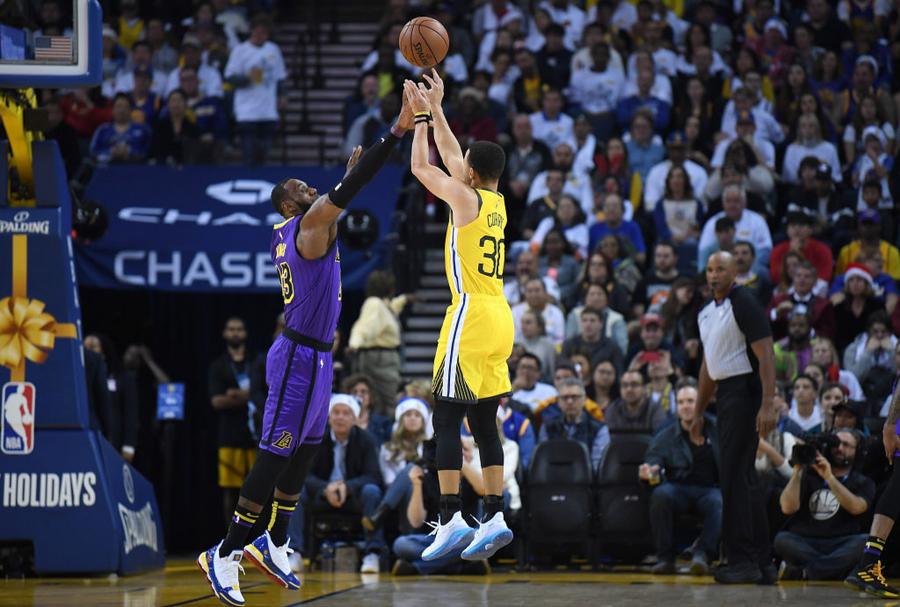
Thearon W. Henderson/Getty Images
About 225 players have cash deals, ranging from $50,000 to $4 million. This tier includes guys like Anthony Davis (Nike), Jayson Tatum (Jordan Brand), and Kristaps Porzingis (Adidas). While they don’t have their own signature shoe, they can provide input into shoe designs, such as a unique colorway. Companies prefer the bulk of these deals to go to guards in larger markets, since they’re playing more nationally televised games and often have the ball in their hands more frequently.
The final type of deal is the one that’s been hit the hardest during the pandemic. Merch deals typically involve a player receiving a set amount of credit to use in purchasing shoes or other merchandise. Typically, that credit is about $15,000 to $25,000, but it can only be used to buy company product. No cash changes hands, and outside of the essentially free products, there aren’t any other incentives. These deals are often year-to-year and don’t roll over. Players with leftover credit often have to buy in bulk toward the end of the agreement.
On his podcast, NBA writer Ric Bucher said that about 150 players have a paid shoe deal of some kind — and about half are expiring and won’t be renewed. That leads players to bounce around companies on a game-by-game basis. One game, a non-superstar player may rock a pair of Adidas, only to wear Nike the next game and Under Armour the following night. At least 100 players won’t have a shoe deal this season, and that number could creep as high as 175 — or nearly 39 percent of the entire league.
Rookies are no longer a sure bet
In the past, companies would offer most first-round draft picks a deal. Much like a stock portfolio, they believed that even if two or three picks missed the mark, having one reach All-Star level — even a mid-round pick like Donovan Mitchell , Giannis Antetokounmpo , or Kawhi Leonard — would more than make up for it.
That approach has changed. After a few seasons of being burned, shoe companies are now generally content to wait and see who pans out before offering a deal. They may still end up signing a player that fizzles out after only a few seasons, but they’d rather make sure he has some on-court success first. To use another stock market analogy: if you invested in Google in 2007 after they had some initial success, instead of when they first went public in 2004, you’re probably not kicking yourself too much. Shoe companies are taking a similar strategy.
This season, LaMelo Ball was the only player from the 2020 NBA Draft class to receive a shoe deal. He signed a multi-year contract with Puma worth $100 million. Ball has already become the youngest player to ever record a triple-double, and thanks in part to his father Lavar and brother Lonzo, he’s already part of an established, recognized family. We all remember when Big Baller Brand burst onto the scene, right?
Compare that to 2019. R.J. Hampton, the 24th pick in the NBA Draft, who received a multi-year deal from Li-Ning worth millions. Those types of deals simply aren’t there for this draft class, including the top two picks, Anthony Edwards and James Wiseman.
Non-retro? Not interested
There will always be a place for retro sales in any business. Record players and turntables still have interested buyers. Classic video game titles can be introduced to new generations — the recent remastering of the first two Tony Hawk Pro Skater games being a prime example. Basketball fans will shell out money for a retro Jordan or Kobe shoe.
But non-retro shoes? Those are seeing harsh declines. Fans simply aren’t interested in purchasing a 2020/21 signature basketball shoe.
Check this out: back in 2015, non-retro shoes sold $1.3 billion in revenue. Last year? That number was more than halved, with non-retro shoes doing $640 million in revenue. People are simply wearing other kinds of shoes.
Signature shoes won’t go away, but as we start another year, the landscape is certainly changing. The next time you tune in to watch your favorite player take the court, pay attention to his kicks. They could be earning him millions — or nothing at all.
- Next Season Kevin Durant Will Make WAY More Money Wearing Shoes Than Playing Basketball…
- Billionaire Michael Jordan Has Zero Influence On Which Players Wear His Shoes, And The Reason Why Is Kind Of Strange…
- The Jordan Brand Is Suffering From A Problem That Was Previously “Unthinkable”
- Will Adidas Ever Be Able To Catch Up To Nike?
- Michael Jordan Made More Money Last Year Selling Shoes Than He Did From His Entire NBA Career
- Highest Paid NBA Players 2014 – Including Endorsements
Next Season Kevin Durant Will Make WAY More Money Wearing Shoes Than Playing Basketball…
ByBrian Warneron August 20, 2014inArticles›Celebrity News
When Kevin Durant was a rookie, he had two competing companies desperately vying to sign the future super star to a shoe contract. As you might have guessed, those two companies were Nike and Adidas . Amazingly, Kevin opted to go with Nike despite the fact that their contract would pay $22 million LESS than than the one offered by Adidas. He must have been a big Nike fan! Even after you take out $22 million, Kevin’s rookie deal was still very lucrative. Nike paid him $60 million over seven seasons, roughly $8.5 million per year. That Nike deal is about to expire, so Kevin once again finds himself accepting offers as a shoe free agent. So, is Adidas gonna pony up the dough to finally get their man? Or is Nike gonna cough up a truck-load of cash to keep one of the league’s most popular and talented players? Actually, believe it or not, neither of these sportswear giants are even in the running for Kevin Durant this time around…
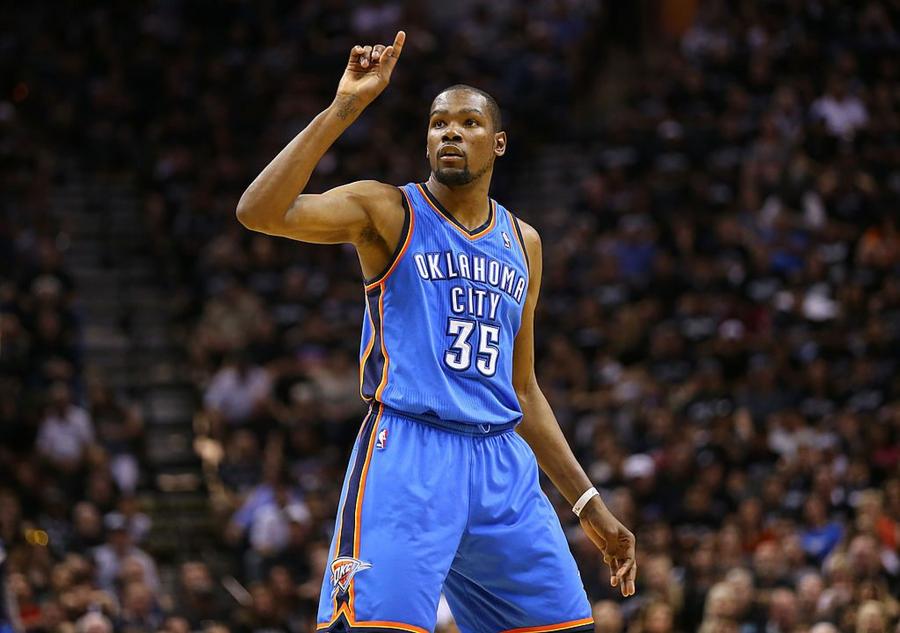
Kevin Durant / Ronald Martinez/Getty Images
If the reports are true, Kevin Durant is on the verge of signing an absolutely ginormous shoe deal with… Under Armour . Under Armour will reportedly pay Durant $30 million per year for the entire length of the contract, which is believed to be seven years. That’s $210 million , by the way. As you may have guessed from the title of this article, $30 million is WAY more money than Kevin will earn on the court next season. During the 2014-2015 season, the Oklahoma City Thunder are on track to pay Kevin $19 million . During the 2015-2016 season, he will earn $20 million . At that point, Kevin becomes a free agent. Oh, and by the way, Adidas did make a run at trying to sign Kevin this time around, but once the bidding got up to $20 million per year, they bowed out.
Under Armour may seem like an odd choice considering the fact that the company isn’t really known at all for their basketball shoes. In fact, out of Under Armour’s $683 million total 2013 revenues, only around $6 million came from selling basketball shoes. That’s a little bit less than 1% . It may also interest you to know that Under Armour’s annual marketing budget is roughly $300 million , so by the power of math, if this deal goes through, 10% of their 2014 budget will be spent on this one deal. Kind of a big gamble.
If Lebron’s rookie shoe deal with Nike was worth $90 million and Durant’s was worth $60 million (and could have been $82 million if he had gone with Adidas), surely today’s rookies must be raking in the cash, right? I mean, even John Wall made $25 million over five years with Reebok, when signed with them four years ago. Well, for whatever reason, the value of rookie shoe contracts has plummeted over the last few years. Maybe Nike and Adidas have been burned a few too many times by top heavy contracts with players who don’t end up panning out.
Andrew Wiggins was the #1 draft pick this year. He recently signed a contract with Adidas that will pay him… $2 million per year over five years. That’s $10 million for those of you who are bad at math. LeBron made more off Nike in his first year, when you include his signing bonus.
It’s a trend happening around the league. Many companies just aren’t willing to risk throwing so much money at an unproven rookie nowadays. As a lot of the athletes coming out now only play one year in college, there isn’t even really a lot of collegiate footage to rely on. Also keep in mind that Nike did not earn a profit off their deal with Lebron until 2012, almost a full decade into his NBA career. Nike has reportedly not broken even yet on their deal with Durant, so they probably wont ever at this point.
It’s unclear yet whether or not this deal with Kevin Durant will payoff for Under Armour. Let me remind everyone that back in 2012, Dwyane Wade ditched his $10 million Nike contract to sign with a Chinese shoe company called Li-Ning . No one in the US had ever heard of Li-Ning back then, and I dont think much has changed in the last two years. So this is clearly a very risky move for Under Armour. Only time will tell how this will turn out.
- Nike Makes Kevin Durant An Offer He Can’t Refuse (And Under Armour Sulks To The Exits)
- Kevin Durant Net Worth
- Kevin Durant Has Quietly Been Investing In Companies All Year
- Kevin Durant Invests In Pizza Chain, Pieology
- Kevin Durant’s One-Year Contracts Might Ultimately Lead To The End Of The Warriors Dynasty
- Kevin Durant Just Launched A $275 Million SPAC – What Does That Mean And How Rich Could It Make Him?
