Kevin Durant Just Launched A $275 Million SPAC – What Does That Mean And How Rich Could It Make Him?
ByBrian Warneron November 29, 2021inArticles›Sports News
During his NBA career so far, Kevin Durant has won two NBA Championships, four scoring titles, the rookie of the year award and is an 11-time All-Star. He’s earned $270 million in salary alone, another $150 million from endorsements, giving Durant a current net worth of $200 million .
Outside of basketball Kevin also serves as the co-CEO of a company called Thirty Five Ventures (a reference to his former jersey number). Through Thirty Five Ventures, Durant just oversaw the public market launch of a Special Purpose Acquisition Company called Infinite Acquisition Corp . Also known as a “SPAC,” last week Infinite raised $275 million in the public markets.
What does all of that mean exactly?
What is a SPAC?
What happens next and how could Kevin Durant eventually make a fortune through Infinite Acquisition Corp.?

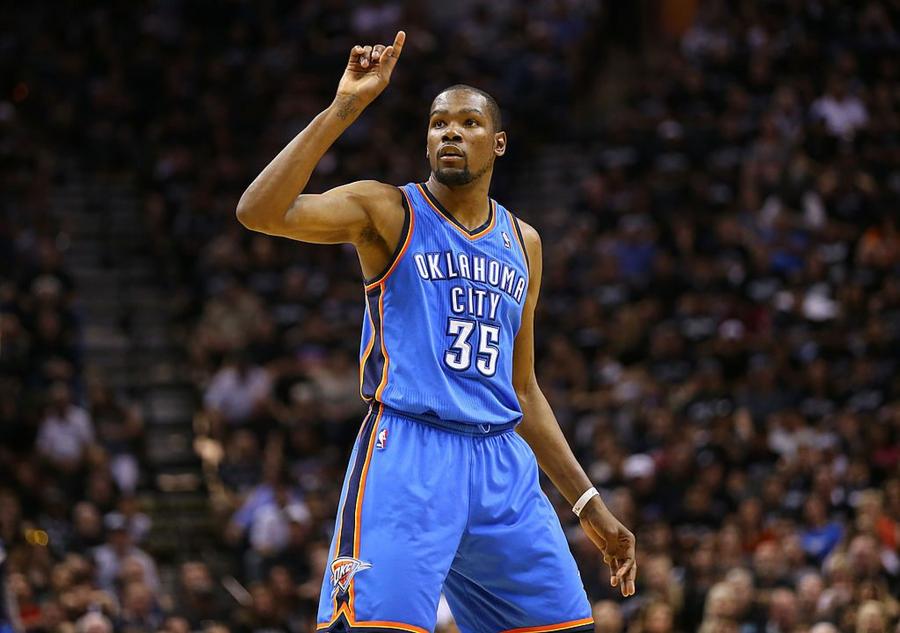
(Photo by Elsa/Getty Images)
What is a SPAC?
Let’s start with the basics. What is a SPAC?
A SPAC is basically a back-door way to hack a company into being publicly traded without having to go down the the traditional IPO path.
SPACs have actually existed for decades but, until recently, the vast vast vast majority of companies looking to go public followed the traditional IPO path.
The traditional path involves starting a company that fills some need and generates revenue. That company is operated for a few years and potentially even is already generating profits by charging more for a service than is spent to create that service. When the company wants to go public it hires an investment bank (or several banks working together) to conduct a year-long dance with hedge funds, pension funds, private wealth offices and individual billionaires, with the goal of convincing these rich people that the company’s value will increase 100-fold in the years after going public. The dance goes back and forth. Valuations are debated. If a valuation is agreed-upon by all sides, a chunk of shares are offered publicly. The investment bank, company insiders and rich early investors pray that the public markets buy the shares on IPO day. That’s a traditional IPO.
With a SPAC, a notable person (typically an investor with a great business management track record) goes public with nothing but a company name. There’s no underlying business or plan to launch a business. There’s simply a promise to try to buy someone else’s business in the next year or two.
In Kevin Durant’s case, his SPAC is named Infinity Acquisition Corp.
SPACs go public without any of that diligence or back-and-forth. One day they just offer shares of a shell company. SPAC shares almost always have a set share price of $10. The price stays steady intentionally, so if a SPAC is looking to raise $100 million it would sell 10 million shares at $10.
It’s that simple. A SPAC announces it wants to raise X amount of money by listing shares of an empty shell company on a public exchange. Investors who believe in the SPAC can buy shares for $10 a share. In Kevin Durant’s case, Infinite went public on the New York Stock Exchange on November 19 under the ticker symbol NFNT.UN. Over the five trading days it’s been public, the share price has alternated between $10.08 and $10.13.
Kevin and his partners raised $275 million from the offering.
SPACs are required to use the money it raised within a specified period of time to buy a company. Most SPACs give themselves a 24-month window. Kevin Durant’s has an 18-month window. In that time frame the SPAC must identify and “merge” with an actual company – one with a business model, revenue, costs, profits, employees etc. By merging with the already-public SPAC, the target company essentially “goes public” by absorption, without any of the “traditional” IPO rigamarole I described moments ago.
Kevin Durant’s SPAC has 18 months to identify and merge with a private company. According to Infinite’s prospectus, the company intends to acquire a company or companies in the crypto, health, e-commerce and sports industries.
Investors in Kevin’s SPAC (or any other SPAC) are betting that Kevin’s team will find a great company to merge with and the end result public company will be worth much more than the money that was raised to put it all together.
What happens if Kevin doesn’t buy a company within 18 months?
If Infinite Acquisition Corp. doesn’t acquire a company within 18 months – and that happens A LOT with SPACs, the holding company simply gives all the money back to its investors. Finding a quality company to acquire is becoming a real challenge. Especially after the last year which saw the announcement of a seemingly endless number of SPACs. Kevin is far from the only celebrity who has announced a SPAC. Shaquille O’Neal, Stephen Curry, Serena Williams , Alex Rodriguez , Ciara, Colin Kaepernick , Jay-Z and Sammy Hagar have all announced SPACs.
What happens if Kevin does buy a company?
Once the SPAC identifies a company it wants to buy/merge/SPAC with, a public announcement is issued. At that point any investor who doesn’t want to be part of the SPAC anymore can exchange their shares for cash. A clean break.
For example, let’s say Kevin announces that Infinite Acquisition is going to SPAC with some silly NFT company (which is definitely going to happen). As a rational person, if you find that to be an undesirably use of funds, you can say “thanks, but no thanks. I’m out” and get all of your investment back.
How Kevin Durant could make A LOT of money:
Kevin Durant is classified as a “sponsor” of his SPAC.
Sponsors of a SPAC typically receive 20% of the SPAC’s equity just for putting the deal together . This is the whole key to understanding why SPACs have become all the rage. Imagine if you were a really popular person in a small town. And imagine if based on your popularity alone you were able to raise $1 million from a thousand of your fellow townspeople. And then you had a year to identify a local business to buy for $1 million. You choose the local car wash. You use the $1 million to buy the car wash. When it’s all said and done, you own 20% of the car wash personally without having to put any of your own money down.
In Kevin’s deal, he has a co-CEO and together they are funded by a bank called LionTree. That’s three sponsors. So let’s say each Sponsor (Kevin + his partner + the bank) gets 1/3 of the 20% stake. If Infinite Acquisition Corp successfully SPACs with a business in the next 18 months, they will each own around 6.7% of the merged-public company. To make the math simple, let’s say everything goes perfectly and the merged-public company ends up with a post-IPO market cap of $1 billion. If that happened, each sponsor would own a $67 million stake just for putting the deal together!
- Kevin Durant Has Quietly Been Investing In Companies All Year
- Kevin Durant Now Has A 5 Percent Stake In The Philadelphia Union Soccer Team
- Kevin Durant Will Be Giving Up A TON Of Money If He Leaves The Thunder
- Next Season Kevin Durant Will Make WAY More Money Wearing Shoes Than Playing Basketball…
- Nike Makes Kevin Durant An Offer He Can’t Refuse (And Under Armour Sulks To The Exits)
- Even After His Injury, Kevin Durant Can Make An Extra $57 Million – Here’s How
Next Season Kevin Durant Will Make WAY More Money Wearing Shoes Than Playing Basketball…
ByBrian Warneron August 20, 2014inArticles›Celebrity News
When Kevin Durant was a rookie, he had two competing companies desperately vying to sign the future super star to a shoe contract. As you might have guessed, those two companies were Nike and Adidas . Amazingly, Kevin opted to go with Nike despite the fact that their contract would pay $22 million LESS than than the one offered by Adidas. He must have been a big Nike fan! Even after you take out $22 million, Kevin’s rookie deal was still very lucrative. Nike paid him $60 million over seven seasons, roughly $8.5 million per year. That Nike deal is about to expire, so Kevin once again finds himself accepting offers as a shoe free agent. So, is Adidas gonna pony up the dough to finally get their man? Or is Nike gonna cough up a truck-load of cash to keep one of the league’s most popular and talented players? Actually, believe it or not, neither of these sportswear giants are even in the running for Kevin Durant this time around…
Kevin Durant / Ronald Martinez/Getty Images
If the reports are true, Kevin Durant is on the verge of signing an absolutely ginormous shoe deal with… Under Armour . Under Armour will reportedly pay Durant $30 million per year for the entire length of the contract, which is believed to be seven years. That’s $210 million , by the way. As you may have guessed from the title of this article, $30 million is WAY more money than Kevin will earn on the court next season. During the 2014-2015 season, the Oklahoma City Thunder are on track to pay Kevin $19 million . During the 2015-2016 season, he will earn $20 million . At that point, Kevin becomes a free agent. Oh, and by the way, Adidas did make a run at trying to sign Kevin this time around, but once the bidding got up to $20 million per year, they bowed out.
Under Armour may seem like an odd choice considering the fact that the company isn’t really known at all for their basketball shoes. In fact, out of Under Armour’s $683 million total 2013 revenues, only around $6 million came from selling basketball shoes. That’s a little bit less than 1% . It may also interest you to know that Under Armour’s annual marketing budget is roughly $300 million , so by the power of math, if this deal goes through, 10% of their 2014 budget will be spent on this one deal. Kind of a big gamble.
If Lebron’s rookie shoe deal with Nike was worth $90 million and Durant’s was worth $60 million (and could have been $82 million if he had gone with Adidas), surely today’s rookies must be raking in the cash, right? I mean, even John Wall made $25 million over five years with Reebok, when signed with them four years ago. Well, for whatever reason, the value of rookie shoe contracts has plummeted over the last few years. Maybe Nike and Adidas have been burned a few too many times by top heavy contracts with players who don’t end up panning out.
Andrew Wiggins was the #1 draft pick this year. He recently signed a contract with Adidas that will pay him… $2 million per year over five years. That’s $10 million for those of you who are bad at math. LeBron made more off Nike in his first year, when you include his signing bonus.
It’s a trend happening around the league. Many companies just aren’t willing to risk throwing so much money at an unproven rookie nowadays. As a lot of the athletes coming out now only play one year in college, there isn’t even really a lot of collegiate footage to rely on. Also keep in mind that Nike did not earn a profit off their deal with Lebron until 2012, almost a full decade into his NBA career. Nike has reportedly not broken even yet on their deal with Durant, so they probably wont ever at this point.
It’s unclear yet whether or not this deal with Kevin Durant will payoff for Under Armour. Let me remind everyone that back in 2012, Dwyane Wade ditched his $10 million Nike contract to sign with a Chinese shoe company called Li-Ning . No one in the US had ever heard of Li-Ning back then, and I dont think much has changed in the last two years. So this is clearly a very risky move for Under Armour. Only time will tell how this will turn out.
- Nike Makes Kevin Durant An Offer He Can’t Refuse (And Under Armour Sulks To The Exits)
- Kevin Durant Net Worth
- Kevin Durant Has Quietly Been Investing In Companies All Year
- Kevin Durant Invests In Pizza Chain, Pieology
- Kevin Durant’s One-Year Contracts Might Ultimately Lead To The End Of The Warriors Dynasty
- Kevin Durant Just Launched A $275 Million SPAC – What Does That Mean And How Rich Could It Make Him?
