Singapore’s Richest Man Made His Fortune With A Chain Of Hot Pot Restaurants
ByAmy Lamareon February 15, 2020inArticles›Billionaire News
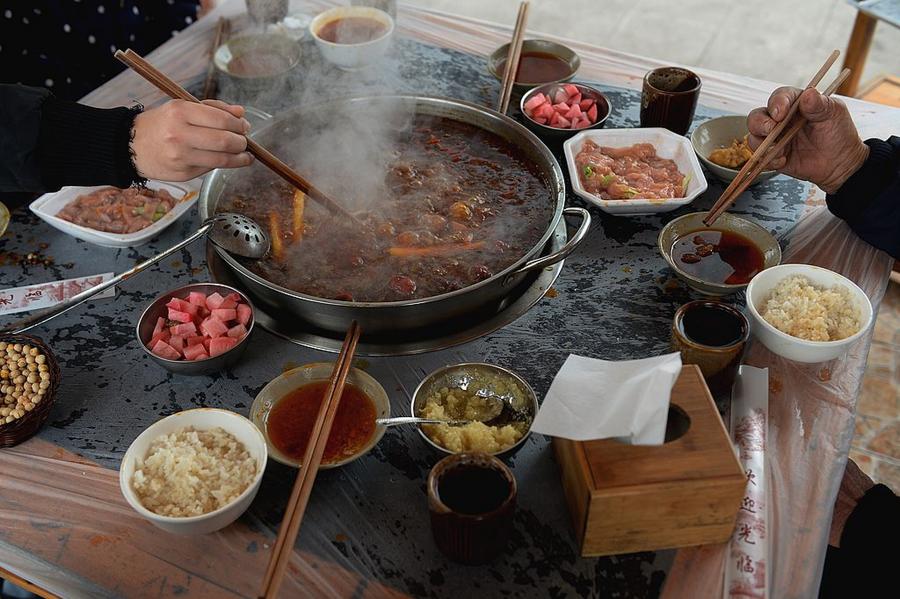
Hot pot restaurants are a definite craze sweeping the world, and this has made Haidilao founder Zhang Yong the richest man in Singapore – and that’s no easy feat. In Singapore, half of the population is in the world’s richest 10%. First off, in case you’re confused about what a hot pot is, it is a Chinese cooking method, prepared with a simmering pot of soup stock at the dining table, containing a variety of Asian ingredients. Hot pot originated a century ago as a cheap and easy meal for peasants squatting by the river to cook ox tripe and other offal but has since turned into a cultural phenomenon.
Also, it’s pretty hard to become a billionaire as a chef or restauranteur, but that’s exactly what Zhang has accomplished. Zhang’s Haidilao chain of hot pot restaurants have taken over the world. At the end of 2018, Haidilao Hot Pot had 466 restaurants in more than a hundred cities, including Los Angeles.
Zhang, 49, was born into poverty in rural Jianyan, Sichuan, China in 1970. Today, Zhang has a net worth of $13.9 billion and his hot pot empire has restaurants in the U.S., U.K., Canada, South Korea, Japan, Australia, Singapore, and Malaysia.
MARK RALSTON/AFP via Getty Images
As a teen, Zhang educated himself by reading books from his local library. He turned to reading to escape his social awkwardness. He was unsure of himself and tongue-tied around girls. By reading books that were from authors outside of China, Zhang realized he was “ignorant and dull.” He dropped out of high school and graduated from a vocational school. He worked at a local tractor factory for six years. When he was 19, he decided to get a meal in a local restaurant instead of the factory’s cafeteria. This was his first meal in a restaurant and it was a hot pot restaurant. Zhang thought the staff was rude and the food was sub-par. He left that meal believing in the value of customer service.
In 1994, he quit his job as a welder in a tractor factory that paid him $14 per month after getting into an argument with his supervisor after he was denied a company apartment he wanted to share with his then-fiancée Shu Ping. He borrowed $1,500 from Shu and friends Shi Yonghong and Li Haiyan to open a tiny hot pot restaurant with four tables. He promised his fiancée and friends that their investment in him would grow to $21,500 within five years and if it didn’t, he would pay them back.
Zhang drew customers to his restaurant by offering good discounts and free snacks. He didn’t know how to cook hot pot all that well, so he focused on excellent customer service instead. Within months of opening, Haidilao was the biggest hot pot restaurant in Jianyang. His second location opened and thrived. Haidilao Hot Pot is known for its spicy dishes and its customer service.
In 1998, a friend suggested partnering to open a third Haidilao in Xi’an. Within six months that restaurant failed and Zhang attributed the failure to the fact that he wasn’t running the restaurant. Since then, he has never partnered with anyone else.
Zhang’s motivation to start his hot pot empire was simply to escape the poverty of his young life. He had a friend when he was young who was murdered by his own mother after his father left the family. She couldn’t make ends meet. After she killed her son, she committed suicide. Zhang has said: “Haidilao’s mission, vision, and values are one and the same: change your life with your own hands.” In Mandarin, the world haidilao means “scooping for treasure at the bottom of the sea.”
Haidilao’s reputation for incredible customer service fueled its success. The restaurant offered free manicures, leather shoe cleaning services, massage chairs for waiting customers. Guests are entertained by performances or having chefs come to their table to prepare food. Haidilao opens a new restaurant every three days. Each restaurant takes just one to three months to break even. The growth of his hot pot chain is a testament to the curiosity in Chinese food and culture by foreigners.
Haidilao’s employees are also a pretty happy group. Haidilao’s employees in China are mostly young people from rural towns with little education. They are the kind of young people that Zhang himself was. The company promotes internally and pays staff fairly. Employees make salaries that are much higher than the industry average. The company’s CEO started out as a waitress.
The $1,500 loan to Zhang turned out to be a great investment that has turned all three of Zhang’s friends, who scraped their money together to invest in his dream, into billionaires. Zhang’s net worth skyrocketed when Haidilao went public on the Hong Kong stock exchange in September 2018. Not long after, he moved to Singapore and became a naturalized citizen with a Singaporean passport. The company raised $963 million from the IPO. Haidilao had $17 billion in sales last year
After Zhang’s move to Singapore, his incredible net worth of over $13 billion helped him take the title of richest in Singapore from real estate tycoons Robert and Phillip Ng. The Ngs have a net worth of $10.1 billion.
- Zhang Yong Net Worth
- Panda Express Launched With A Small Business Loan. Today Its Founders Are Multi-Billionaires…
- At 16 Dawn Lafreeda Started Waiting Tables At Denny’s, Today She Owns 75 Locations.
- Martin Yan Net Worth
- Canceled Ant Group IPO Robs Jack Ma Of $3 Billion
- The Marijuana Billionaire Who Accurately Predicts Where It Will Be Legalized Next
The Marijuana Billionaire Who Accurately Predicts Where It Will Be Legalized Next
ByAmy Lamareon March 7, 2019inArticles›Billionaire News
Brendan Kennedy has been on the go since his company, Tilray, went public in July 2018. In fact, he has boarded more than 135 flights, 23% more than he did the year before. His company is in one of the hottest industries to hit the market in eons – marijuana. Tilray sells cannabis for medical marijuana and the growing recreational marijuana markets. The IPO of Tilray not only made Kennedy a billionaire, but also the richest man in the legal marijuana business.
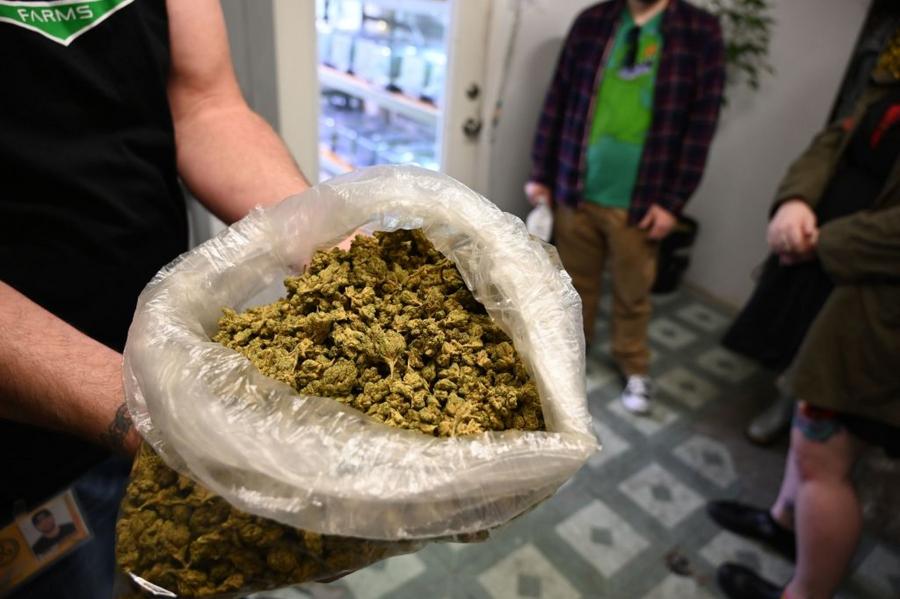
Tilray’s headquarters are in Nanaimo on Vancouver Island in British Columbia, a short flight from Kennedy’s home in Seattle. Tilray quickly became one of the largest employers on the island of 92,000 people. Tilray’s 65,000 square foot cannabis lab and grow facility produces thousands of pot plants that are shipped to tens of thousands of patients, pharmacies, and dispensaries in 12 of the countries where medical or recreational weed is currently legal.
Marijuana is now legal for either medical or recreational use in some 36 countries and 33 U.S. states plus the District of Columbia. There is still a federal ban on marijuana, but the recently passed Farm Bill exempted the hemp plant and its derivative cannabidiol, or CBD, from the federal ban, clearing the way for explosive growth. Legal pot sales are expected to more than double from $10.5 billion in 2018 to $22.2 billion in 2022 in the U.S. alone. Worldwide, that figure is expected to be $31.6 billion. By then, Kennedy expects that the U.S. will have legalized the drug in all 50 states.
ROBYN BECK/AFP/Getty Images
Kennedy grew up in San Francisco as the sixth of seven children. He was never a pot smoker. He was born with a cleft lip that required surgery to repair. He attended an all boys Jesuit prep school called St. Ignatius – where his dad taught science. He studied architecture at UC Berkeley and worked construction during school. Kennedy started and sold two dotcom-era software companies and then went and got his MBA from Yale. In 2006, after business school, he got a job working as an internal analyst at Silicon Valley Bank. His job was to help venture capitalists and their portfolio companies value their private stock. During the spring of 2010, Kennedy kept coming across data that placed significant value in the cannabis industry.
California was putting a ballot question on legalization before voters that fall. He pulled Gallup poll charts on American attitudes about controversial issues like gay marriage and the legalization of marijuana and found a trend – support for both was growing equally and state laws were following suit. The only doubts Kennedy had about the cannabis industry were his own ambivalence toward the product. He struggled to balance the enthusiasm he heard from cancer patients and military vets with the attitude of his own anti-drug upbringing. Nancy Reagan’s old slogan about staying away from drugs haunted him. How could the thing she railed against actually be good for you? However, at the same time, Kennedy didn’t think the law’s failure to distinguish marijuana from other narcotics like heroin made any sense either.
In the spring of 2011, Kennedy officially quit his job. A few months later, armed with a PowerPoint presentation, he went to the home of the former president of SVB Analytics, his old boss, Jim Anderson. The presentation was the idea for Privateer Holdings, a private equity firm with the mission to acquire and create cannabis companies and brands. His presentation was data driven. He laid out what he expected to happen in the cannabis industry over the next decade. Anderson invested in the first round of funding—that investment has given him a return of more than 100x since Tilray went public. Privateer owns 73% of Tilray. Everything that Kennedy predicted back in 2011 has come to pass.
At times, Kennedy has wondered if he entered the marijuana market too early. In late 2011, he and his co-founders spent their pooled savings on the marijuana and dispensary review site Leafly. The site publishes ratings on cannabis strains – sold legally or on the street – from users all over the world. The lack of data on the cannabis industry terrified the data driven Kennedy. Leafly would give him the data he needed. Monetizing Leafly was another problem. The Yelp of cannabis could not attract investors or advertisers and it was not long before Kennedy had depleted his savings, his 401k, maxed out his credit cards, and borrowed money from family to develop Leafly. At one point, he even emptied the jug of change next to his washing machine for a grand total of $196. There was a night where he didn’t even have enough money to order a pizza. Not even Dominos. Not even with a coupon. He didn’t mind being broke as much as he worried about what his career prospects would be if he failed. Would he forever be known as the failed pot guy?
Then, in 2012, Washington and Colorado legalized pot. Investors and advertisers wanted a piece of Leafly. In 2013, Canada started its legalization process. Nevada, California, and other states followed. To stay ahead of the competition—which is growing stronger—Kennedy spends a lot of time trying to predict which country will legalize marijuana next. He got a leg up on South Korea as his data predicted that country would be next. They were and the November news that they had legalized medical cannabis shocked everyone except Kennedy.
On July 19, 2018, Tilray became the first cannabis company to have an IPO on the U.S. stock exchange. The IPO raised $153 million with shares at $17. At the peak of the stock price in September, Tilray had risen 1,159% in just two months. It was worth more than Snapchat. Since then stock has fallen off about 50 percent but it is still trading at about 50 times estimated sales.
Even Kennedy, who is a valuation expert, finds it hard to pin down a number for how big Tilray could be. His priority for the foreseeable future is growth—not profit. Street sales of marijuana are still way more common than legal ones across the globe, making it impossible to predict the true demand for cannabis.
Still, Kennedy is absolutely convinced that the end is near for the federal ban on cannabis is the United States. In fact, he predicts that the U.S. will legalize cannabis in 2021. If the U.S. doesn’t follow his prediction, it isn’t the end for Tilray. He expects more than 70 countries to have legalized medical marijuana by 2021.
- Canadian Weed Legalization Has Made A Number Of Entrepreneurs Millionaires And Billionaires
- Jay-Z Enters The Weed Game, Debuts High-End Cannabis Brand
- Legal Marijuana Sales Skyrocketed To Record Levels On 4/20 This Year
- Boy, Sheldon Adelson Really, Really, Hates Pot
- Billionaire Winners And Losers In The Marijuana Legalization Battle
- Damian Marley Is Converting A Former Prison Into A Marijuana Grow Space
